Matilde Gattoni presents a stark and unfiltered account of coastal erosion across West Africa, where more than 7,000 kilometres of shoreline from Mauritania to Cameroon are retreating at alarming rates. Entire communities are being erased as the sea advances, forcing mass displacement while governments prioritise the protection of cities, ports, and industrial zones.
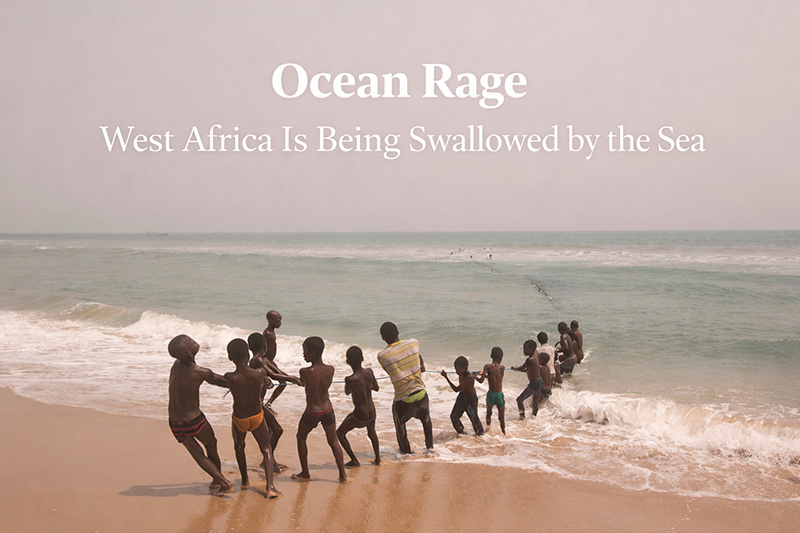
Drawing on two decades of documenting climate change and its human cost, Gattoni focuses on fishing villages in Ghana, Togo, and Benin that have vanished within a single generation. Homes, places of worship, and farmland have been lost, along with cultural memory and social cohesion. Rising sea temperatures have depleted fish stocks, while erosion and salinisation have destroyed agriculture, leaving families without food, fresh water, or livelihoods.
The talk moves beyond regional reportage to frame West Africa as an early warning. It exposes the global consequences of unchecked development, urbanisation, and consumer driven growth, where traditional communities are sacrificed as resources decline. Through powerful visual storytelling and lived human narratives, Gattoni examines what is being lost, who bears the cost, and why this crisis demands a fundamental reassessment of how progress is defined.
What you will take away:
• A clear understanding of the scale and human impact of coastal erosion in West Africa
• Insight into how climate change dismantles livelihoods, culture, and food security
• A broader perspective on why these disappearing villages matter far beyond the region
Who this is for:
• Photographers and visual storytellers focused on environmental and social issues
• Students and professionals interested in climate change, sustainability, and human geography
• Anyone seeking a deeper, human centred understanding of the global climate crisis
 Matilde Gattoni